
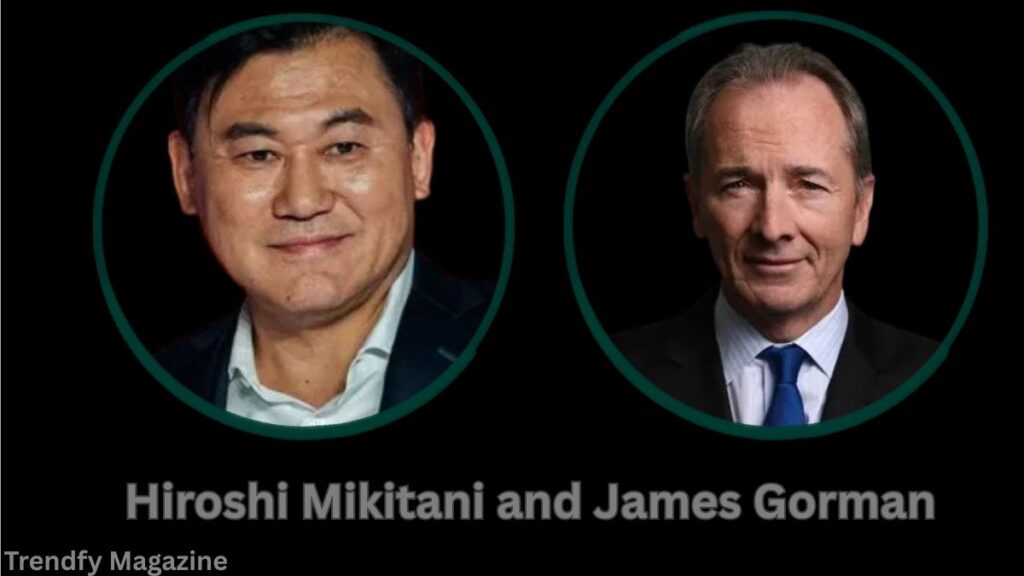
Hiroshi Mikitani and James Gorman are two of the most recognized names in global business. Mikitani built Rakuten from a small online marketplace into a massive Japanese technology group. Gorman spent over a decade leading Morgan Stanley, one of the world’s largest banks. Because both men are so prominent, many people search for a direct link between them.
The truth is simpler than the rumors. There is no verified evidence that Hiroshi Mikitani and James Gorman are personal business partners, co-investors, or friends. Their real connection is institutional: Rakuten has worked with Morgan Stanley and Morgan Stanley-linked firms on major financial transactions. This article explains that relationship clearly and separates fact from assumption.
What Is the Connection Between Hiroshi Mikitani and James Gorman?
The connection between Hiroshi Mikitani and James Gorman is not personal. It is corporate. Rakuten, the company Mikitani founded and still runs, has used Morgan Stanley entities for capital-raising, advisory work, and securities services. Gorman led Morgan Stanley as CEO from 2010 to 2023.
That timeline means Gorman was in charge of Morgan Stanley when some of its work with Rakuten took place. But leading a bank is not the same as personally advising a client. Public announcements name the institutions involved. They do not name Gorman as Mikitani’s personal banker or dealmaker.
So the honest answer is this: Mikitani and Gorman have a documented institutional overlap, not a direct partnership.
How Rakuten and Morgan Stanley Are Connected
Rakuten is a major technology and e-commerce group. Like many large companies, it regularly needs banks to help it raise money, manage debt, and handle complex financial moves. Morgan Stanley and its Japanese joint ventures have provided those services.
The relationship is practical, not personal. Rakuten needs capital markets expertise. Morgan Stanley and its partners provide it. This is a normal business relationship between a large corporation and a global financial institution.
| Rakuten | Morgan Stanley | |
|---|---|---|
| Main business | E-commerce, fintech, mobile, digital services | Investment banking, wealth management, trading |
| Leader | Hiroshi Mikitani (founder and CEO) | Ted Pick (CEO since 2024) |
| Connection point | Client seeking financial services | Institution providing financial services |
| Personal partnership | None documented | None documented |
Morgan Stanley’s Presence and Business in Japan
Morgan Stanley has a long history in Japan. Its most important local structure is a securities joint venture with Mitsubishi UFJ Financial Group (MUFG). This alliance began in 2008 and launched two joint venture companies in 2010.
These two companies are Mitsubishi UFJ Morgan Stanley Securities and Morgan Stanley MUFG Securities. They cover different parts of the market. Mitsubishi UFJ Morgan Stanley Securities serves individual and corporate clients with wealth management, investment banking, and sales and trading. Morgan Stanley MUFG Securities focuses on institutional services like research, sales and trading, and capital markets. Morgan Stanley holds a 40% economic interest in Mitsubishi UFJ Morgan Stanley Securities and a 51% voting interest in Morgan Stanley MUFG Securities.
This joint venture network is how Morgan Stanley-linked entities became involved in Rakuten transactions. Key facts about Morgan Stanley’s Japan presence include:
- The joint venture with MUFG launched in 2010 after a strategic alliance formed in 2008.
- Mitsubishi UFJ Morgan Stanley Securities provides investment banking, capital markets, and wealth management services.
- Morgan Stanley MUFG Securities focuses on institutional clients, research, and trading.
- The alliance was expanded in 2024 with a plan called “Alliance 2.0.”
Morgan Stanley’s Work With Rakuten
Rakuten has used Morgan Stanley and Morgan Stanley-linked firms for several major financial transactions. These deals show the institutional relationship clearly.
In early 2024, Rakuten conducted cash tender offers for U.S.-dollar senior notes. Morgan Stanley & Co. LLC was named as one of the dealer managers, alongside Goldman Sachs, Daiwa Capital Markets America, and Mizuho Securities USA. Gorman was Morgan Stanley’s executive chairman at that time, having stepped down as CEO at the end of 2023.
In 2025, Mitsubishi UFJ Morgan Stanley Securities was one of the lead managers for Rakuten’s sustainability bonds. Rakuten planned to use the proceeds for 5G-related investments.
In 2026, during Rakuten’s planned reorganization of its fintech businesses, Rakuten appointed Mitsubishi UFJ Morgan Stanley Securities and BofA Securities Japan as financial advisers. By that time, Gorman had already retired from Morgan Stanley, which shows the institutional relationship continued independently of him.
| Year | Rakuten Transaction | Morgan Stanley Entity Involved |
|---|---|---|
| 2024 | U.S.-dollar senior notes tender offers | Morgan Stanley & Co. LLC (dealer manager) |
| 2025 | Sustainability bonds | Mitsubishi UFJ Morgan Stanley Securities (lead manager) |
| 2026 | Fintech business reorganization | Mitsubishi UFJ Morgan Stanley Securities (financial adviser) |
How Hiroshi Mikitani Built Rakuten
Hiroshi Mikitani was born in Kobe, Japan, in 1965. He studied at Hitotsubashi University and then worked at the Industrial Bank of Japan. In 1993, he earned an MBA from Harvard Business School.
Mikitani left his banking career and founded Rakuten in 1997. The company started as an online shopping mall with just six people and 13 stores. At the time, many people doubted that products could be sold on the internet. Mikitani believed the internet would change how goods were distributed. He wanted to give small and regional businesses a way to compete with large corporations.
Rakuten grew far beyond online shopping. Today it operates an ecosystem of more than 70 businesses. These include e-commerce, travel, banking, securities, credit cards, digital content, and mobile communications. Rakuten reported consolidated revenue of ¥2.497 trillion for 2025, a 9.5% increase from the previous year.
Mikitani remains Rakuten’s Representative Director, Chairman, President, and CEO. He also holds a significant ownership stake. A February 2026 disclosure listed him personally with about 8.14% of Rakuten shares. Crimson Group, LLC, a shareholder tied to his interests, held 10.43% separately.
James Gorman’s Career at Morgan Stanley
James Gorman is an Australian-born financial executive. He trained as a lawyer in Melbourne before moving into management consulting at McKinsey & Company. He later held senior roles at Merrill Lynch before joining Morgan Stanley in 2006.
His rise at Morgan Stanley was steady. He became co-president in 2007 and CEO in January 2010, taking over as the firm was still recovering from the global financial crisis. He added the chairman title in 2012. His strategy focused on shifting Morgan Stanley toward wealth management and investment management, which generate steadier fees than trading and investment banking.
| Date | Milestone |
|---|---|
| February 2006 | Joins Morgan Stanley |
| December 2007 | Named copresident |
| January 2010 | Becomes CEO, succeeding John Mack |
| January 2012 | Adds chairman title |
| February 2020 | Announces acquisition of ETRADE |
| October 2020 | ETRADE deal closes; wealth management assets reach about $3.3 trillion |
| October 2020 | Announces acquisition of Eaton Vance |
| January 2024 | Steps down as CEO; Ted Pick becomes CEO |
| January 2025 | Becomes chairman emeritus; retires from Morgan Stanley employment |
Gorman’s Role at Disney and Beyond

Gorman did not leave public life after Morgan Stanley. In 2024, he joined the board of The Walt Disney Company and led its Succession Planning Committee. In January 2025, he became chairman of Disney’s board, succeeding Mark G. Parker.
At Disney, Gorman’s role is about governance and oversight, not daily operations. He chaired the committee that selected Josh D’Amaro as Disney’s next CEO, effective at the March 2026 annual meeting. Gorman remains Disney’s board chairman.
In April 2025, Gorman also became a senior advisor at General Atlantic, an investment firm. His role there involves advising on enterprise strategy and growth initiatives. So his current portfolio includes three main roles: Disney board chairman, Morgan Stanley chairman emeritus, and General Atlantic senior advisor.
Does Morgan Stanley Own Part of Rakuten?
Public shareholder records show an entry for “MSIP CLIENT SECURITIES” holding shares in Rakuten. In a 2021 disclosure, this entity was listed with about 3.65% of Rakuten shares. A later 2025 record showed a similar client securities entry at 3.78%.
This does not mean Morgan Stanley owns those shares for itself. A client securities account can hold shares on behalf of many different clients, counterparties, or beneficial owners. The entry does not prove that Morgan Stanley, or James Gorman personally, has a direct ownership stake in Rakuten.
| Shareholder Entry | Shares Held | Percentage | What It Means |
|---|---|---|---|
| MSIP CLIENT SECURITIES | About 81.9 million (2025 record) | About 3.78% | Client account, not necessarily Morgan Stanley’s own holding |
| Hiroshi Mikitani (personal) | 176,703,400 | About 8.14% | Founder’s personal stake |
| Crimson Group, LLC | Not disclosed in this table | 10.43% | Shareholder tied to Mikitani’s interests |
What Public Records Reveal About Their Business Connection
The available public records support a clear conclusion: Mikitani and Gorman have an institutional connection, not a personal one. Here is what the records show:
- Rakuten has used Morgan Stanley entities for multiple capital-markets transactions between 2024 and 2026.
- Morgan Stanley & Co. LLC was a dealer manager for Rakuten’s 2024 senior notes tender offers.
- Mitsubishi UFJ Morgan Stanley Securities, a Morgan Stanley-linked joint venture, has served as a lead manager and financial adviser for Rakuten.
- Gorman was Morgan Stanley’s CEO and then executive chairman during some of this work, creating an organizational overlap.
- No official document names Gorman as Mikitani’s personal adviser or as a direct participant in any Rakuten deal.
- Rakuten’s dealings with Morgan Stanley-linked firms continued after Gorman retired from Morgan Stanley, showing the relationship is institutional.
Conclusion
Hiroshi Mikitani and James Gorman are not business partners. They have never co-founded a company, served on the same board, or been documented as personal friends. Their names appear together because Rakuten, the company Mikitani built, has used Morgan Stanley and Morgan Stanley-linked firms for major financial transactions. Gorman led Morgan Stanley during part of that period, which creates an institutional overlap. But leading a bank is not the same as personally advising a client. The evidence supports a corporate relationship, not a personal one.
FAQs
Are Hiroshi Mikitani and James Gorman business partners?
No. There is no verified evidence that they are personal business partners. Their companies have an institutional financial connection.
Did James Gorman work for Rakuten?
No. Gorman’s career was at Morgan Stanley, and he later became Disney’s board chairman and a senior advisor at General Atlantic.
Did Morgan Stanley work with Rakuten?
Yes. Morgan Stanley & Co. LLC was a dealer manager for Rakuten’s 2024 notes offering. Morgan Stanley-linked Mitsubishi UFJ Morgan Stanley Securities has also worked on later Rakuten financing and advisory deals.
Was James Gorman personally involved in Rakuten’s financing?
Official announcements do not establish that. The documents name the institutions involved, not Gorman as an individual adviser.
Is Hiroshi Mikitani still the CEO of Rakuten?
Yes. Rakuten’s management information lists Mikitani as Representative Director, Chairman, President, and CEO.
What is James Gorman doing now?
As of 2026, Gorman is chairman of The Walt Disney Company, chairman emeritus of Morgan Stanley, and a senior advisor at General Atlantic.
Related Topic :
Safra Catz and John Stankey: What Really Connects These Two CEOs