
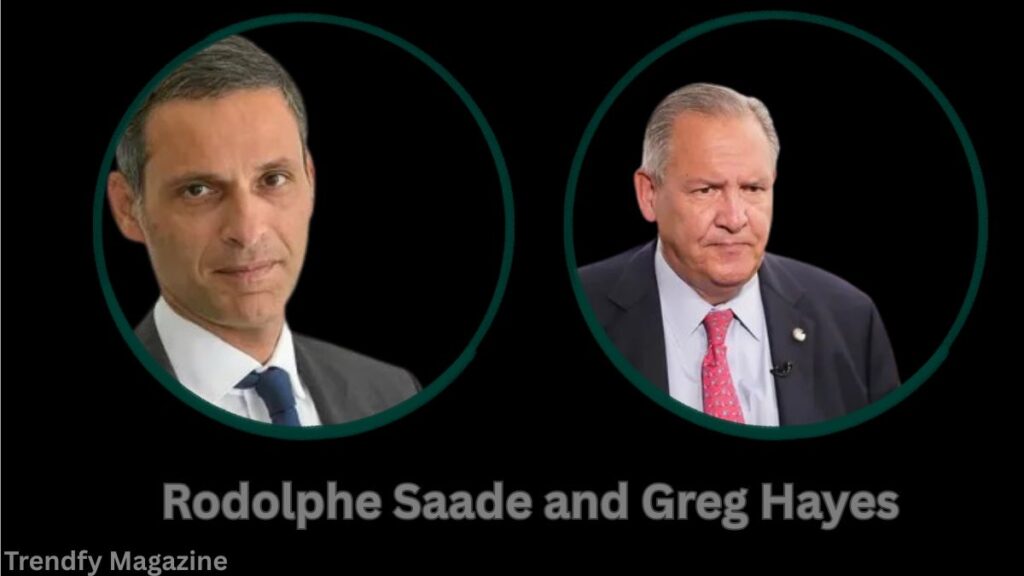
Rodolphe Saadé and Greg Hayes are two major names in global business. Saadé leads one of the world’s largest shipping and logistics companies. Hayes is a former aerospace executive who now sits on major corporate boards. People often search for rodolphe saade and greg hayes together because both have worked around transportation, aviation, and international supply chains. However, there is no public evidence that they have ever worked together or had a direct business partnership.
Why Rodolphe Saadé and Greg Hayes Are Mentioned Together
The main reason these two names appear together is industry overlap. Saadé runs CMA CGM, a company that moves goods across oceans, ports, and now the skies. Hayes spent decades leading aerospace companies that make aircraft engines, systems, and defense technology. Both men operate in the massive global transportation economy. Their companies can touch the same supply chains without the two executives ever meeting. Search engines and business databases sometimes group executives by industry, which can make unrelated figures look connected. In this case, the connection is only at the industry level, not at the personal or corporate level.
Rodolphe Saadé’s Rise From Shipping to Global Business Leadership
Rodolphe Saadé was born in Lebanon in 1970. He studied business and marketing at Concordia University in Montreal. After graduating, he started a small water dispenser company before joining his family’s shipping business in 1994. CMA CGM was founded by his father, Jacques Saadé, in Marseille, France, in 1978.
Saadé worked his way up through the company. He managed shipping lines, oversaw international routes, and became Vice Chairman. In 2017, he became Chief Executive Officer. After his father passed away in 2018, he also became Chairman. Today, he jointly controls CMA CGM with his siblings and mother.
Building CMA CGM Into More Than a Shipping Company
Under Saadé’s leadership, CMA CGM has grown far beyond container shipping. The company acquired CEVA Logistics in 2019, which expanded its contract logistics and freight management business. It also bought GEFCO, Colis Privé, and Bolloré Logistics. In 2021, CMA CGM created its own air cargo division called CMA CGM AIR CARGO.
The group now operates more than 700 vessels and serves over 420 commercial ports in 160 countries. It also runs warehouses, terminals, and inland transportation networks. In 2026, CMA CGM continued expanding by acquiring Crystal Aero Solutions, an aircraft maintenance provider, and agreeing to buy FedEx Supply Chain for $1.4 billion. Saadé’s strategy is vertical integration — controlling more parts of the supply chain so customers can rely on CMA CGM from start to finish.
Greg Hayes’ Path From Finance to Aerospace Leadership

Gregory J. Hayes was born in 1960 in the United States. He earned a bachelor’s degree in economics from Purdue University and became a Certified Public Accountant. He joined United Technologies Corporation (UTC) in 1999 through its merger with Sundstrand Corporation. Before that, he worked in finance roles that prepared him for senior leadership.
Hayes served as UTC’s Chief Financial Officer from 2008 to 2014. He became CEO in 2014 and Chairman in 2016. His background is very different from Saadé’s. Saadé grew up inside a family-run shipping business. Hayes built his career inside a large, publicly traded American industrial company.
The Corporate Transformation That Created RTX
Hayes is best known for reshaping United Technologies. When he became CEO, UTC was a diversified conglomerate that made everything from elevators to aircraft engines. Hayes changed that.
In 2015, UTC sold Sikorsky Aircraft, a helicopter maker. In 2018, it acquired Rockwell Collins, an avionics company. In 2020, UTC spun off Carrier, which makes air conditioning systems, and Otis, which makes elevators. These became independent companies. UTC then merged its remaining aerospace businesses — Pratt & Whitney and Collins Aerospace — with Raytheon Company to form Raytheon Technologies. The company was later renamed RTX.
RTX is now one of the world’s largest aerospace and defense companies. It makes aircraft engines, flight systems, missiles, and defense electronics. Hayes’ approach was the opposite of Saadé’s. Instead of adding more businesses, he removed ones that did not fit and concentrated on aerospace and defense.
Is There a Direct Business Connection Between Saadé and Hayes?
No. There is no publicly documented deal, joint company, board position, investment, family relationship, or announced partnership directly linking Rodolphe Saadé with Greg Hayes. Saadé leads CMA CGM. Hayes is a former RTX executive who now holds board positions at other companies. Neither man has ever served on the other’s board. Neither company has announced a strategic partnership involving the other.
Their careers intersect at the industry level because CMA CGM operates cargo aircraft and RTX makes aircraft engines and systems. But being active in connected industries does not create a personal or corporate relationship. No reliable public record shows Hayes negotiating a deal with Saadé, investing in CMA CGM, or joining any Saadé-controlled company. Claims of a partnership should not be trusted without evidence from corporate filings or official announcements.
How CMA CGM and RTX Operate in the Global Economy
| Category | CMA CGM | RTX |
|---|---|---|
| Main business | Shipping, logistics, ports, air cargo | Aerospace and defense |
| What it moves or makes | Goods, containers, freight | Engines, aircraft systems, defense technology |
| Key brands or divisions | CMA CGM, CEVA Logistics, CMA CGM AIR CARGO | Collins Aerospace, Pratt & Whitney, Raytheon |
| Global reach | 420+ ports, 160 countries | Customers worldwide, including commercial airlines and governments |
| Role in supply chain | Moves products from factories to buyers | Supplies technology that powers and protects aircraft |
CMA CGM moves physical goods. Its ships, trucks, warehouses, and cargo planes connect factories to stores and consumers. RTX supplies the technology that makes aviation possible. Collins Aerospace builds aircraft systems. Pratt & Whitney makes engines. Raytheon serves military and defense customers. Both companies are important to the global economy, but they operate at different layers of the transportation and technology ecosystem.
How Rodolphe Saadé and Greg Hayes Compare
| Category | Rodolphe Saadé | Greg Hayes |
|---|---|---|
| Born | 1970, Lebanon | 1960, United States |
| Education | Concordia University, Montreal | Purdue University |
| Core background | Shipping and logistics | Finance, aerospace, industrial management |
| Main company | CMA CGM | United Technologies, Raytheon Technologies, RTX |
| Leadership style | Expansion across the supply chain | Restructuring and aerospace consolidation |
| Key deals | CEVA Logistics, Bolloré Logistics, FedEx Supply Chain | Rockwell Collins, Carrier and Otis spinoffs, Raytheon merger |
| Current role in 2026 | Chairman and CEO of CMA CGM | Lead Independent Director of Phillips 66; Director at BD |
Saadé built scale by adding new capabilities. He moved CMA CGM from a container shipping company into a full-service logistics group. Hayes built scale by focusing. He turned a sprawling industrial conglomerate into a concentrated aerospace and defense leader. Both approaches created large, influential companies, but they reflect very different business philosophies.
Where They Stand in 2026
As of September 2026, Rodolphe Saadé remains Chairman and CEO of CMA CGM. The group reported $15.7 billion in revenue for the second quarter of 2026, with growth in shipping volumes and logistics activities. CMA CGM continues to invest in air cargo, terminals, and logistics acquisitions. Saadé has said he wants CMA CGM to become the second-largest container carrier before the end of 2027.
Greg Hayes is no longer an RTX executive or director. He stepped down as Executive Chairman on April 30, 2025, and his role as Special Advisor to the CEO ended on January 2, 2026. In May 2026, Phillips 66 appointed him Lead Independent Director. He also serves on the board of Becton, Dickinson and Company (BD), a medical technology company. His post-RTX career has shifted from running a large aerospace manufacturer to overseeing corporate governance at other companies.
Conclusion
Rodolphe Saadé and Greg Hayes are both influential business leaders, but they are not business partners. Saadé runs CMA CGM, a global shipping and logistics giant. Hayes is a former aerospace executive who now serves on corporate boards. Their careers overlap in the broad world of transportation and aviation, but no public evidence shows a direct relationship between them. Understanding their separate roles helps clarify why they appear together in searches while remaining distinct figures in the business world.
FAQs
Are Rodolphe Saadé and Greg Hayes business partners?
No. There is no verified public information showing they are business partners. Saadé leads CMA CGM, while Hayes is a former RTX executive who now holds board positions at Phillips 66 and BD.
Did Greg Hayes ever work for CMA CGM?
No. There is no credible public record showing Hayes worked for CMA CGM. His career was with United Technologies, Raytheon Technologies, and RTX.
Does Rodolphe Saadé own or control RTX?
No. RTX is a publicly traded American corporation. Saadé is associated with CMA CGM and his family’s business interests.
Is Greg Hayes still CEO of RTX?
No. Christopher Calio became RTX CEO in May 2024. Hayes served as Executive Chairman until April 2025 and as Special Advisor until January 2026. He is no longer part of RTX’s leadership.
What does Greg Hayes do now?
He is Lead Independent Director of Phillips 66 and a director at Becton, Dickinson and Company. He also chairs Phillips 66’s Nominating and Governance Committee.
Why do people search for Rodolphe Saadé and Greg Hayes together?
Both men have worked in industries connected to global transportation and aviation. CMA CGM operates cargo aircraft, and RTX makes aircraft engines and systems. This industry overlap can make their names appear together in searches, but it does not mean they have a direct relationship.
Related Topic :
Hans Vestberg and Jeff Greene: Inside the Verizon Connection